

Published June 16, 2026
When we published our initial note in early March, the Middle East had just experienced a historic shock, and we framed the developments through the three themes we set out for the year: volatility, dispersion, and fragmentation. We also made a specific call – that markets were responding through a geopolitical risk-premium lens rather than reassessing global growth or emerging market fundamentals, and that durable relief would require not merely calmer seas but the reinstatement of commercial war-risk insurance and a credible diplomatic exit. Markets began pricing a deal ahead of the June 14 U.S.-Iran memorandum of understanding (MoU). This note picks up where the last left off: what was agreed, how markets responded, and whether the framework can hold.
The Agreement
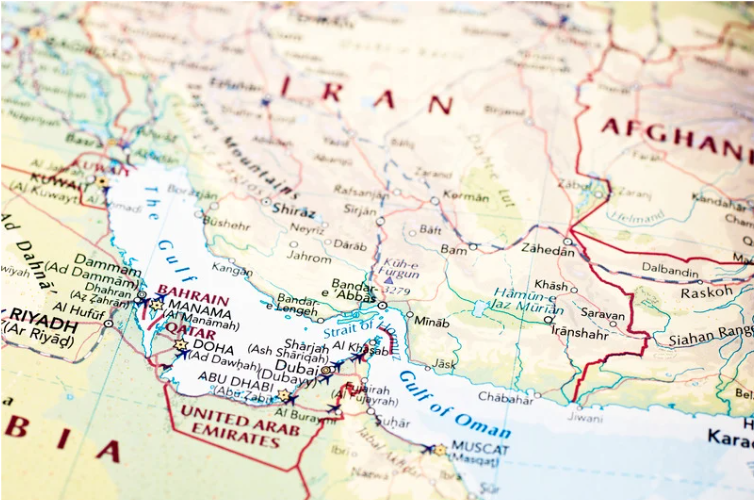
On June 14, the United States and Iran signaled that they’ve reached a MoU, with formal signing set for Friday in Switzerland. Mediated by Pakistan and Qatar, with Saudi Arabia and Türkiye in supporting roles, the framework carries a notably broad sponsor coalition and more regional weight than a purely bilateral understanding would. As we understand it, the memorandum rests on three pillars: first, reopening the Strait of Hormuz and restoring normal maritime transit, alongside lifting the U.S. naval blockade on Iranian ports and easing sanctions to let Iran sell more oil, with the important caveat that the transit arrangement is contested rather than settled (Tehran, via Fars, maintains that Gulf marine traffic will be regulated by Iran in coordination with Oman, cutting against Washington’s framing of a strait that is toll-free and open to all); second, a 60-day ceasefire to halt hostilities and create space for negotiation over Iran’s nuclear program; and third, a structured process for nuclear talks designed to move the parties from a cessation of fighting toward a more durable settlement, with final-agreement negotiations reportedly postponed until Iran meets its initial obligations under the MoU.
What the framework does not yet do is as important as what it does. It does not resolve the core enrichment and stockpile questions that have defined the Islamic Republic’s nuclear ambitions for two decades. The memorandum commits the parties to a process, not an outcome, an essential distinction for how we assess its durability below.
Market View: How Markets Have Responded
Back in March, we wrote that war in the Middle East would likely bring higher oil, wider credit spreads, and equities under selling pressure. That held initially, but markets recovered relatively swiftly on deal speculation, U.S. tech optimism, and emerging market resilience. The SPX is higher and EMBIG spreads tighter than pre-conflict levels. The move is visible in softer crude and firmer risk appetite – a configuration that gold reinforces rather than complicates. Gold rallied into February, sold off through the conflict, and has firmed on the deal, albeit more moderately than crude has fallen, behaving as a risk-on asset rather than a traditional safe haven. In other words, the bid to gold reflects risk appetite rather than caution; the dollar offers the more guarded cross-asset read. Crude has fallen sharply from its 2026 peaks, with both Brent and WTI retreating on expectations that Hormuz transit will begin to normalize and that the supply risk premium embedded in the futures curve will deflate. Arguably the more durable driver is structural rather than logistical; with the U.S. blockade lifted and sanctions easing, previously sanctioned Iranian barrels are positioned to return, reinforcing our view that the supply premium deflates rather than merely re-rates.
Implications for government bond yields in advanced and emerging economies are more complex. The early-war flight-to-quality move has given way to concerns about underlying inflation that might not fizzle out easily, even as the tail scenario of a prolonged regional war recedes.
In that context, central banks are likely to face a meaningful dilemma in the coming weeks. The stagflationary impulse we flagged in March was transmitted primarily through the energy price shock. As oil prices ease, that impulse weakens. However, inflation pressures already in the system might not abate as quickly, especially given uncertainty around fertilizers and global food prices into 2027. As such, while the upside inflation risks that a sustained supply shock would have imposed on systemic central banks have likely softened, any room reopening for rate cuts would require significant additional clarity and time. In the meantime, we believe a “wait-and-see” approach by the global systemic central banks as the most likely near-term scenario.
Is It Sufficient? The Durability Question
We regard the MoU as a genuine but conditional off-ramp, and we would caution against treating a framework as a resolution. Several open items keep process risk as the dominant variable. First, the memorandum had reportedly not been formally endorsed by Supreme Leader Mojtaba Khamenei within the signing window, leaving a question over whether the political center in Tehran fully owns the commitment. Second, the same caveat we raised in March still applies: Iran’s Islamic Revolutionary Guard Corps operates with significant autonomy from the political leadership, and the military tempo on the ground remains the most reliable real-time indicator of whether the off-ramp is genuine. Third, the 60-day ceasefire is a runway, not a settlement. It buys time for negotiation without guaranteeing success. Finally, President Trump has signaled that strikes could resume absent a satisfactory nuclear accord, a posture that both sharpens the incentive to negotiate and underscores how reversible the current calm could prove. On balance, we see a credible path, but one whose continuation depends on execution rather than intent.
Who Else Holds Sway
The agreement’s durability will be shaped as much by third parties as by Washington and Tehran. Israel’s posture is the key swing risk: Israeli strikes on Beirut and southern Lebanon nearly derailed the framework in its final stages, and Prime Minister Netanyahu’s position on Iranian nuclear capability and on the unfreezing of Iranian assets remains a potential flashpoint. Encouragingly, the framework reportedly incorporates an Israel-Hezbollah/Lebanon ceasefire component, which, if it holds, would remove one of the most immediate escalation channels. We are also watching GCC alignment, picking up the “GCC cohesion” thread from our March note: a unified Gulf posture behind the agreement would reinforce it, while visible fractures would undercut it. Finally, the European position matters – the United Kingdom, Germany, France, and Italy have linked any sanctions relief on Iran to concrete nuclear concessions, and the sequencing of that relief against verifiable steps will influence whether Tehran judges the deal worth sustaining.
What We Are Watching
We are monitoring concrete indicators for evidence that de-escalation is translating into real economic normalization rather than merely improved sentiment: signs of tanker traffic normalization from vessel-tracking data through the Strait of Hormuz, the shape of the crude futures curve, and, in particular, the unwinding of front-end backwardation tied to supply risk, among others.
Beyond energy, the fertilizer channel is a distinct and slower-moving source of inflationary pressure that warrants monitoring. Fertilizer prices lead consumer food prices by four to six months, meaning the inflationary signal from the spring supply shock will not clear consumer price indices until late 2026.
The Normalization Sequence
Even a fully executed agreement does not restore normal conditions instantaneously. The immediate near-term marker is execution of the MoU itself. Beyond that, normalization proceeds in sequence rather than all at once: the ceasefire must hold, physical security must improve, underwriters must independently reinstate war-risk coverage, shipping must resume, and logistics and aviation must normalize. Beyond the Strait itself, the sequencing extends further: Ras Laffan Industrial City – the world’s largest LNG processing hub, source of roughly 34% of global helium supply and a significant share of global ammonia capacity which sustained direct damage in the March 18 attacks – must resume operations before fertilizer and petrochemical supply chains can normalize, and before prices begin to reflect real-world de-escalation. Each link depends on the one before it. We would caution clients against expecting relief in a single step. The more realistic expectation is a staged normalization over weeks.
Investment Implications
For emerging markets, our core framing from March is unchanged and, if anything, reinforced. The episode’s impact remains highly differentiated. The unwinding of the energy premium is, all else equal, a modest net headwind for major exporters even as it relieves importers. We expect gradual, uneven normalization across supply chains and prices, combined with bottom-up policy responses, to drive relative performance. In general, emerging markets entered this period with stronger reserve buffers, improved debt maturity profiles, and greater policy flexibility than in past geopolitical shock episodes. From a local markets perspective, we retain preference for countries with positive real rate buffers amid a still fluid global inflation and rates outlook.
The path from here will be staged and conditional rather than clean, but it remains consistent with the themes we have emphasized all year: a credible diplomatic path that is not yet a settlement, with a normalization sequence that is neither automatic nor instantaneous. We remain confident that A Better Approach to Emerging Markets®, grounded in rigorous analysis, active differentiation, and a steadfast focus on risk, positions us to navigate the volatility ahead and to capture the opportunities that dispersion creates.
Please reach out to [email protected] if you have any questions or would like to discuss the weekend’s developments in more detail.
This document is for informational purposes only. The information presented is not intended to be relied upon as a forecast, research or investment advice, and is not a recommendation, offer or solicitation to buy or sell any securities or to adopt any investment strategy. Gramercy may have current investment positions in the securities or sovereigns mentioned above. The information and opinions contained in this paper are as of the date of initial publication, derived from proprietary and nonproprietary sources deemed by Gramercy to be reliable, are not necessarily all-inclusive and are not guaranteed as to accuracy. This paper may contain “forward-looking” information that is not purely historical in nature. Such information may include, among other things, projections and forecasts. There is no guarantee that any forecasts made will come to pass. Reliance upon information in this paper is at the sole discretion of the reader. You should not rely on this presentation as the basis upon which to make an investment decision. Investment involves risk. There can be no assurance that investment objectives will be achieved. Investors must be prepared to bear the risk of a total loss of their investment. These risks are often heightened for investments in emerging/developing markets or smaller capital markets. International investing involves risks, including risks related to foreign currency, limited liquidity, less government regulation, and the possibility of substantial volatility due to adverse political, economic or other developments. References to any indices are for informational and general comparative purposes only. The performance data of various indices mentioned in this update are updated and released on a periodic basis before finalization. The performance data of various indices presented herein was current as of the date of the presentation. Please refer to data returns of the separate indices if you desire additional or updated information. Indices are unmanaged, and their performance results do not reflect the impact of fees, expenses, or taxes that may be incurred through an investment with Gramercy. Returns for indices assume dividend reinvestment. An investment cannot be made directly in an index. Accordingly, comparing results shown to those of such indices may be of limited use. The information provided herein is neither tax nor legal advice. Investors should speak to their tax professional for specific information regarding their tax situation.