

Published March 1, 2026 at 2:00 PM ET.
Middle East Developments and Market Implications
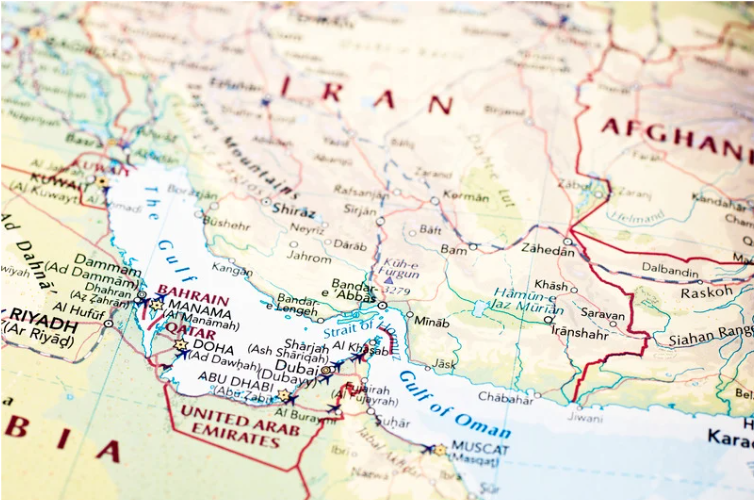
Weekend developments in the Middle East represent a significant escalation in geopolitical risk, centered on Iran, Israel, and U.S. involvement. The most consequential developments include a historic shock to Iran’s leadership structure, with the confirmed death of Supreme Leader Ayatollah Ali Khamenei and multiple senior security officials. An interim leadership arrangement has been established, but operational control has remained primarily with the Islamic Revolutionary Guard Corps, underscoring that institutional continuity — rather than collapse — is shaping Iran’s response. In parallel, Iran issued vessel interdiction notices and threatened closure of the Strait of Hormuz, the world’s most critical oil chokepoint, through which roughly 20% of global seaborne oil and a meaningful share of LNG normally transit. Iran’s Foreign Minister has since stated publicly that Iran does not intend to close the Strait of Hormuz, and it has remained nominally open; however, commercial shipping has largely paused regardless, as insurance underwriters withdrew war-risk coverage within hours of the initial strikes. Our assessment is that the binding constraint on oil flows is currently the insurance market, not a military blockade — and that restoring normal transit will require underwriter reinstatement, not just physical security improvements.
While the situation remains fluid, the economic and market effects will ultimately depend on the duration and scope of the conflict. That said, markets are likely, at least initially, to respond primarily through a geopolitical risk premium lens rather than a reassessment of global growth or emerging market fundamentals. If markets were open at present, we would expect a pronounced risk off tone, characterized by higher oil and gold prices, lower government bond yields in advanced economies, wider credit spreads, and equity markets facing selling pressure. Of course, a great deal can—and likely will—change as events continue to unfold.
Market transmission is likely to occur primarily through energy, shipping, and logistics channels. Oil prices are expected to reflect the risk of potential supply disruption rather than confirmed physical shortages, with outcomes ranging from a temporary spike should shipping lanes reopen relatively quickly to more sustained upward pressure in the event of a prolonged disruption, particularly with respect to the Strait of Hormuz. Logistical friction is also likely to persist. Even if the Strait of Hormuz isn’t physically closed, disruption and elevated risk perceptions are likely to persist. Insurance premiums may remain elevated or rise further, coverage could continue to be withdrawn, and cargo vessels may increasingly turn back or reroute mid voyage if safety is a concern. Air traffic is also likely to face ongoing disruption, as airspace and airport closures force longer, more fuel intensive diversions on key routes. As a result, aviation and trade flows through the region may continue to experience significant disruption, contributing to higher costs and delays across major east west global commerce corridors. Further, the OPEC+ announcement early this morning of a preliminary agreement to increase April production by 206,000 barrels per day is likely to be offset by the logistical and insurance bottlenecks currently constraining supply. Taken together, we believe the scope for immediate relief is limited.
These developments point to a renewed stagflationary impulse in the global economy. The strength and persistence of that impulse will depend on how long the conflict lasts and how far it spreads, but it clearly complicates the path for central banks. This is a high impact geopolitical event with meaningful near term volatility, particularly in energy and transportation markets. Historically, geopolitical risk premiums have faded when physical supply disruptions proved short-lived. Whether that condition is met on this occasion remains genuinely uncertain, though today’s diplomatic signal is the first meaningful indication that the shorter-duration scenario may be in play. We will continue to monitor developments closely and update as the situation warrants.
For emerging markets, the implications are likely to be uneven and highly differentiated. Energy exporting countries and those with strong external balances may benefit from higher commodity prices, while energy importers with weaker current accounts or greater inflation sensitivity face more pronounced near term pressure. It is worth noting that relatively few emerging market economies are net oil or energy importers. The majority of net energy importers are concentrated in the industrialized global North—namely the U.S., Europe, and Japan—along with China and India. As a result, all else being equal, near term upward pressure on oil and energy prices is likely to be a net positive for most emerging market economies, particularly for major energy producers and exporters outside the Middle East. Importantly, this episode is more likely to increase dispersion across countries and sectors than to signal a broad based emerging market balance of payments or funding crisis. Emerging markets today generally enter this period with stronger reserve buffers, improved debt maturity profiles, and greater policy flexibility than in past geopolitical shock episodes.
What We Are Watching: Next 48 Hours
The near term trajectory of the situation hinges on a small number of variables that are likely to become clearer before markets open on Monday. We are monitoring the following closely.
1. The off ramp.
In a significant late breaking development, President Trump confirmed this morning in an interview with The Atlantic that Iran’s new interim leadership has reached out and that he has agreed to engage in discussions. “They want to talk, and I have agreed to talk, so I will be talking to them,” Trump said, noting that timing remains unspecified. This is the most consequential potential market development at this stage. If talks were to produce even a preliminary ceasefire signal ahead of the Asian market open tonight, the initial risk off reaction could be at least partially reversed. The critical caveat is that Iran’s Islamic Revolutionary Guard Corps—which launched additional waves of attacks this morning—operates with significant autonomy from the interim political council. As a result, the military tempo overnight will be the most reliable real time indicator of whether this off ramp is genuine or primarily a negotiating tactic. Trump was also notably noncommittal when asked whether the bombing campaign would continue in support of a popular uprising, stating, “I have to look at the situation at the time it happens,” a comment that meaningfully reduces the probability of a prolonged regime change campaign.
2. Hormuz: Insurance versus military closure.
The Strait of Hormuz faces two distinct and independent closure mechanisms, both of which must be resolved for oil flows to normalize. The first is Iran’s formal vessel interdiction notice and the underlying military environment. The second—and currently the binding constraint—is the commercial insurance market. Reports indicate that underwriters canceled war risk policies within hours of the initial strikes, before Iran’s formal closure declaration, leading major operators to stand down without a single vessel having been fired upon. Improvements in physical security may be necessary but are unlikely to be sufficient on their own; underwriters must independently reinstate coverage before cargo can move. We are therefore watching war risk premium levels closely, along with any indications of government escorted convoy frameworks, as the key potential unlock.
3. GCC cohesion.
Gulf Cooperation Council foreign ministers are convening an emergency session today. Saudi Arabia has formally summoned the Iranian ambassador, notably stressing that Riyadh had explicitly refused to allow its territory to be used against Iran and was struck regardless. We are watching the joint GCC statement closely for any shift in language that moves beyond condemning Iranian retaliation toward addressing the broader conflict architecture. Such a shift would signal a more material fracture in Gulf political stability than is currently reflected in asset prices.
4. GCC civilian infrastructure.
The conflict has now moved beyond military installations. Dubai International Airport—the world’s busiest international hub—remains suspended until further notice, with no confirmed reopening date, and more than 1,500 flights have been canceled across the region. Schools across the GCC have shifted to remote learning through mid week, and Jebel Ali port has sustained damage. We are watching for signs of operational normalization across Gulf commercial infrastructure as an early indicator of de escalation, and conversely for any expansion of targeting into civilian or economic assets as a warning signal of further deterioration.
We will provide further updates as these variables evolve.
Conclusion
This environment reinforces the three defining themes we have highlighted for the year ahead: volatility, dispersion, and fragmentation. We will continue to monitor developments closely and adjust portfolios as appropriate. While we expect periods of market fragility, we also see scope for opportunity. We remain confident that A Better Approach to Emerging Markets®—grounded in rigorous analysis, active differentiation, and a steadfast focus on risk—positions us well to navigate the challenges and capture opportunities that may arise in the days and weeks ahead.
Please reach out to [email protected] if you have any questions or would like to discuss the weekend’s developments in more detail.
This document is for informational purposes only. The information presented is not intended to be relied upon as a forecast, research or investment advice, and is not a recommendation, offer or solicitation to buy or sell any securities or to adopt any investment strategy. Gramercy may have current investment positions in the securities or sovereigns mentioned above. The information and opinions contained in this paper are as of the date of initial publication, derived from proprietary and nonproprietary sources deemed by Gramercy to be reliable, are not necessarily all-inclusive and are not guaranteed as to accuracy. This paper may contain “forward-looking” information that is not purely historical in nature. Such information may include, among other things, projections and forecasts. There is no guarantee that any forecasts made will come to pass. Reliance upon information in this paper is at the sole discretion of the reader. You should not rely on this presentation as the basis upon which to make an investment decision. Investment involves risk. There can be no assurance that investment objectives will be achieved. Investors must be prepared to bear the risk of a total loss of their investment. These risks are often heightened for investments in emerging/developing markets or smaller capital markets. International investing involves risks, including risks related to foreign currency, limited liquidity, less government regulation, and the possibility of substantial volatility due to adverse political, economic or other developments. References to any indices are for informational and general comparative purposes only. The performance data of various indices mentioned in this update are updated and released on a periodic basis before finalization. The performance data of various indices presented herein was current as of the date of the presentation. Please refer to data returns of the separate indices if you desire additional or updated information. Indices are unmanaged, and their performance results do not reflect the impact of fees, expenses, or taxes that may be incurred through an investment with Gramercy. Returns for indices assume dividend reinvestment. An investment cannot be made directly in an index. Accordingly, comparing results shown to those of such indices may be of limited use. The information provided herein is neither tax nor legal advice. Investors should speak to their tax professional for specific information regarding their tax situation.